A cluttered home can make your mind feel cluttered too. Did you know that excess clutter can increase stress levels by up to 40%? This shows how crucial it is to declutter and organize your home.

Decluttering might seem hard, but with a good plan, it can change your life. Our guide will show you easy decluttering methods. You’ll also get a decluttering checklist to help you get rid of clutter.
By following our step-by-step guide, you’ll make your home more organized and peaceful. This will improve your life quality.
Key Takeaways
- Understand the psychology behind clutter and its impact on mental health
- Prepare for your decluttering journey with a clear plan and checklist
- Apply practical decluttering tips to achieve a clutter-free home
- Create a more organized and peaceful living space
- Enhance your quality of life through a decluttered home
The Psychology Behind Clutter and Its Impact on Wellbeing
Clutter is more than just stuff; it affects our minds and how we work. The mess around us can really mess with our mental health. Clutter can make us feel stressed and less focused.
How Clutter Affects Mental Health and Stress Levels
Studies show that too much clutter can raise our stress hormone, cortisol. This can make us feel anxious and overwhelmed. But, a clean space can calm us down and lower our stress.
The Connection Between Physical Space and Productivity
A messy space can really slow us down. Cleaning up our area helps us focus better and work more efficiently. This leads to more getting done in less time.
Why We Struggle to Let Go of Possessions
We often hold onto things because of the memories they bring back. Figuring out why we keep certain items can make decluttering easier.

| Effects of Clutter | Benefits of Decluttering |
|---|---|
| Increased stress levels | Reduced anxiety |
| Decreased productivity | Improved focus and efficiency |
| Mental health concerns | Enhanced mental wellbeing |
Preparing for Your Decluttering Journey
Starting a decluttering journey is more than just wanting to organize. It needs a solid plan. A good plan keeps you focused and motivated.
Setting Realistic Goals and Timeframes
It’s important to set realistic decluttering goals. First, decide what you want to achieve and by when. Break big tasks into smaller ones. Set specific times for each task to avoid burnout and keep moving forward.
Gathering Necessary Supplies and Tools
The right decluttering supplies make a big difference. Get storage bins, labels, a marker, and a donation box. These tools help you sort and organize your stuff well.
Creating a Personalized Decluttering Plan
A personalized decluttering plan is essential. It should match your needs and priorities. Look at your space, find the most cluttered areas, and plan when to tackle them.
Prioritizing Areas Based on Need
When prioritizing areas, think about how they affect your daily life. Start with areas you use a lot or that stress you out. Seeing results quickly boosts your motivation.
Scheduling Decluttering Sessions
Scheduling decluttering sessions in advance keeps you on track. Make time for decluttering in your calendar and try to stick to it. Short, regular sessions work better than long, infrequent ones.
| Decluttering Task | Priority Level | Time Required |
|---|---|---|
| Sorting clothes | High | 2 hours |
| Organizing kitchen utensils | Medium | 1.5 hours |
| Cleaning out the garage | Low | 4 hours |

By following these steps and making a plan that fits you, you’re on your way to a clutter-free home.
How to Declutter Your Home Step by Step
Starting your journey to a decluttered home is easy once you know the methods and tools. Decluttering can seem hard, but with the right steps, it becomes easier and even enjoyable.
The Four-Box Method: Keep, Donate, Sell, Trash
The four-box method is a simple and effective way to declutter. You sort items into four boxes: keep, donate, sell, and trash. This makes deciding what to do with each item quick and easy.

Popular Decluttering Methodologies
Many decluttering methods have become popular over time. Each has its own way to help you achieve a clutter-free home.
The KonMari Method
The KonMari method, by Marie Kondo, focuses on keeping items that bring joy. It teaches you to handle each item with care and think about its importance.
The 12-Month Usage Rule
The 12-month usage rule is simple. It suggests getting rid of items not used in a year. This rule helps decide on items you don’t use often.
The Minimalist Game
The minimalist game is a fun way to declutter. You get rid of one item on the first day, two on the second, and so on, for 30 days. It makes decluttering a fun challenge.
Digital Tools to Help Organize Your Process
Today, there are many digital tools to help with decluttering. Apps like Trello and Habitica can help you make lists and track your progress. Digital calendars are also useful for planning and reminders.
| Tool | Description | Usefulness |
|---|---|---|
| Trello | Project management tool that can be used for decluttering tasks | High |
| Habitica | App that gamifies your to-do list and habits | Medium |
| Digital Calendars | For scheduling decluttering sessions | High |
Overcoming Emotional Barriers to Decluttering
Decluttering is more than just getting rid of stuff. It’s about facing the emotional ties that make it hard to let go. As you start, you’ll meet emotional hurdles that slow you down. It’s key to tackle these to move forward and achieve a tidy, peaceful home.
Dealing with Sentimental Items
Handling sentimental items is a big emotional hurdle. These items hold memories or emotional value, making them hard to part with. To overcome this, think about making a “memory box” for a few special items. For others, take a photo or write down the memory before letting them go. This keeps the memory alive without the physical item.
Addressing “Just in Case” Thinking
“Just in case” thinking often holds us back from decluttering. This mindset leads to keeping items “just in case” we might need them someday. To fight this, ask yourself when you last used the item and if it’s worth keeping. Making a list of items to get rid of and waiting a few months before deciding can also help.

Managing Guilt About Discarding Gifts
Many feel guilty about getting rid of gifts, especially from loved ones. Remember, the thought and love behind a gift are what matter, not the item itself. If a gift is hard to let go of, think about the giver’s wishes and if they’d want you to be burdened by it.
Celebrating Small Victories
Celebrating small victories is key to staying motivated. Acknowledge your progress, whether it’s finishing a room or sorting a tough box. Keeping a “decluttering journal” to track your wins can also boost your spirits and show how far you’ve come.
| Emotional Barrier | Strategy to Overcome |
|---|---|
| Sentimental Items | Create a memory box or take photos |
| “Just in Case” Thinking | Evaluate last use and necessity |
| Guilt About Discarding Gifts | Consider the giver’s intentions |
| Lack of Motivation | Celebrate small victories |
By tackling these emotional barriers, your decluttering journey will be more effective and less stressful. Remember, decluttering is a journey, and it’s okay to take it one step at a time.
Room-by-Room Decluttering: Kitchen and Dining Areas
Decluttering your kitchen and dining areas is more than just making them look good. It’s about making them work better and feel more welcoming. These spaces are where meals are made and memories are created. But, they can quickly get messy with all the kitchen stuff.

Tackling Cabinets and Drawers
First, tackle the cabinets and drawers. They’re often the messiest parts of the kitchen. Start by assessing cookware and utensils. Go through pots, pans, and utensils. Think about donating or storing things you don’t use often.
Assessing Cookware and Utensils
When checking cookware and utensils, ask if you’ve used them in a year. If not, it might be time to let them go. Look at their condition and if they still work well.
Organizing Food Storage Containers
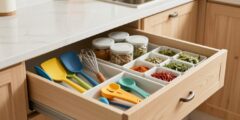
Food storage containers can quickly fill up drawers and cabinets. Organize them by type and size. Use dividers to keep them neat. This makes it easier to find what you need while cooking.
Streamlining Pantry and Refrigerator
A tidy pantry and fridge are key for easy meal prep. Start by getting rid of expired or unused items. Then, sort the rest by category. Use bins and baskets to group similar items.
As Marie Kondo said, “The kitchen’s purpose is not just to cook, but to bring joy.” Making your pantry and fridge organized can really add to that joy.
Creating Clutter-Free Countertops
Countertops can get messy with appliances, cookbooks, and more. To keep them clear, pick a spot for things you use a lot. Use a tray or container for smaller items.
By following these steps, you can make your kitchen and dining areas more useful and enjoyable. Remember, keeping your home tidy is all about staying consistent and organizing regularly.
Room-by-Room Decluttering: Bedrooms and Closets
Turning your bedroom into a calm space starts with decluttering. A tidy bedroom is key for a good night’s sleep and a fresh morning. Decluttering your bedroom and closet makes a peaceful place for rest and renewal.
Wardrobe Assessment and Organization
Start by sorting out your closet. Take everything out and sort items into groups. This makes it clear what you have and helps decide what to keep or throw away.
Seasonal Clothing Rotation helps manage your wardrobe. Store clothes you don’t wear now to cut down on clutter. Use under-bed storage or vacuum-sealed bags to keep clothes fresh and clean.
Seasonal Clothing Rotation
Change your clothes with the seasons to keep your closet tidy. Store clothes you don’t wear now in labeled bins or containers.
The Hanger Trick for Unused Items
Use the Hanger Trick to find out what you don’t wear. Hang clothes with the hook facing the wrong way. When you wear something, hang it back the right way. After a few months, give away or throw away clothes still facing the wrong way.
Nightstands and Under-Bed Storage Solutions
Nightstands can get messy with books, lamps, and more. Use a tray or dish to keep small items in order. For under-bed storage, use bed risers or bins to use the space under your bed.

Children’s Rooms and Toy Management
Keeping kids’ rooms tidy needs good organization and teaching them to clean up. Use labeled bins and baskets for toys and teach kids to put things away after play. Regularly sort through toys and give away or throw away what’s not used or broken.
By using these tips, you can make your bedroom a peaceful and organized space for everyone.
Room-by-Room Decluttering: Living Spaces and Home Office
Turning your living areas and home office into tidy spaces boosts your productivity and happiness. These spots are often cluttered with things like entertainment gear, books, papers, and office supplies. Decluttering them is a great way to start.

Entertainment Centers and Media Organization
Begin with your entertainment centers. Go through your DVDs, CDs, and games. Think about putting your media on digital platforms to save space. Then, organize what’s left in a way that’s easy to reach.
Use storage or cable organizers to keep things neat. This makes your space look better and works better.
Bookshelves and Decorative Items
Bookshelves can get messy with books, decorations, and more. Start by dusting and removing items you don’t need or like. Organize your books by type, author, or color.
Display your favorite decorations and store the rest. This makes your space look good and keeps it organized.
Paper Management and Filing Systems
Good paper management is key in both living areas and offices. Set up a filing system that fits your needs, whether it’s physical or digital. Sort papers into categories like bills, documents to file, and things to throw away.
Creating a Digital Archive
Think about scanning important documents to save space and keep them safe. Use a scanner or a scanning app on your phone. Store them in a cloud service.
Setting Up Mail Processing Stations
Make a spot for handling mail to stay on top of it. Choose a place to sort, pay bills, and write letters. Use a tray or organizer to keep mail until you can handle it.
Home Office Efficiency Strategies
To make your home office better, focus on comfort and organization. Get a good chair, a big desk, and enough light. Use cabinets, shelves, and desk organizers to keep things tidy.
By following these tips, you can make your living and work spaces clutter-free. They’ll be places where you can work well and relax too.
Room-by-Room Decluttering: Bathrooms, Laundry, and Storage Areas
Bathrooms, laundry rooms, and storage spaces often get cluttered. But, with a good plan, they can be organized well. These areas play a big role in how your home feels and works.
Medicine Cabinets and Personal Care Items
Begin by emptying your medicine cabinet and sorting personal care items. Throw away expired or unused products to make room. Then, organize what’s left by type, using containers or baskets to keep things neat.

Linen Closets and Towel Storage
Linen closets can quickly get messy with towels, linens, and cleaning supplies. Use a folding and storage system to save space. Shelf dividers or baskets help keep things off the floor and easy to find.
Garage, Basement, and Attic Organization
Garages, basements, and attics often hold items we don’t use often. Start by sorting items into groups, like seasonal decorations, tools, and out-of-season clothes.
Seasonal Item Storage
Put seasonal items in labeled containers so they’re easy to find. Use vertical storage to make the most of space.
Creating Zones for Different Categories
Split your storage areas into zones for different types of items. For example, have a spot for tools, another for seasonal decorations, and one for out-of-season clothes.
| Storage Area | Items to Store | Organization Tips |
|---|---|---|
| Garage | Tools, sports equipment | Use wall-mounted storage and labeled bins |
| Basement | Seasonal decorations, out-of-season clothing | Utilize shelving units and under-stair storage |
| Attic | Luggage, out-of-season items | Install storage trunks and labeled containers |
Sustainable Disposal Methods for Unwanted Items
Think about the environment when getting rid of clutter. Donate items that are still good, recycle when you can, and dispose of harmful materials safely.
Conclusion: Maintaining Your Clutter-Free Home
Keeping your home clutter-free takes work and dedication. To keep your space tidy, it’s key to make habits and routines that help. This way, you can enjoy your clean home every day.
Make tidying a regular part of your routine. Set aside time each week to keep your home neat. Also, try the “one in, one out” rule to stop clutter from coming back.
By sticking to these tips, you can keep your home organized and clutter-free. This makes your home a place of calm and focus. With regular effort, keeping your home tidy can become a lasting habit.