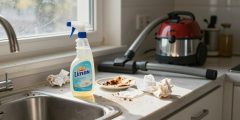
Keeping your home tidy and organized can seem hard, especially when you’re busy. But, a clean home brings many benefits. It can lower stress and help you think clearer.

Picture this: every day, you come home to a place that’s free from clutter. Everything has its spot. This is possible with consistent cleaning and a good cleaning schedule. Just a few minutes each day can stop clutter from growing and keep your home looking great.
Key Takeaways
- Establish a daily cleaning routine to maintain a tidy home.
- Create a cleaning schedule to stay on track.
- Declutter regularly to prevent clutter buildup.
- Assign a designated place for each item in your home.
- Make cleaning a habit by incorporating it into your daily routine.
The Hidden Cost of Inconsistent Home Cleaning
Dirty homes cost more than just money. They affect our health and wallet in big ways. A clean home is key to staying healthy and safe.

Physical and Mental Health Impacts
Dirt and dust can make breathing hard, especially for those with asthma. A messy home also raises stress and mental tiredness. Studies show a tidy home boosts mental focus and lowers anxiety.
Financial Consequences of Neglected Maintenance
Ignoring cleaning can lead to pricey fixes later. For example, dirty gutters can cause water damage. Dust on electronics can make them break. These problems can cost a lot to fix or even need new items.
Recent Studies on Home Cleanliness and Wellbeing
Studies show a clean home is vital for our wellbeing. Cleaner homes mean fewer illnesses and better mental health. A study in the Journal of Environmental Psychology found people in clean homes feel better mentally.
Some key findings from recent studies include:
- A study by the American Lung Association found indoor air pollution is 2-5 times worse than outside. This shows the need for regular cleaning and air flow.
- Research in the Journal of Exposure Science & Environmental Epidemiology stressed the need for dusting and vacuuming to cut down on harmful pollutants.
Why Most Cleaning Routines Fail
Many people find it hard to keep up with cleaning routines. This leads to frustration and a messy home. Knowing why this happens is key to cleaning better.
Unrealistic Expectations
Setting unrealistic expectations is a big reason cleaning fails. Trying to do too much at once can be overwhelming. For example, cleaning the whole house in one day is unrealistic.
Lack of Proper Planning
A lack of planning also hinders cleaning success. Without a plan, tasks seem too big. Breaking tasks into smaller steps helps.
Burnout from Intensive Cleaning Sessions
Burnout from too much cleaning is common. Trying to do too much in one go exhausts you. This often makes you give up on cleaning.
Here’s a table showing how these issues affect cleaning:
| Reason for Failure | Common Issues | Potential Solutions |
|---|---|---|
| Unrealistic Expectations | Setting too many tasks at once | Break tasks into smaller, achievable goals |
| Lack of Proper Planning | Not creating a cleaning schedule | Develop a weekly or monthly cleaning plan |
| Burnout | Overexerting oneself during cleaning | Spread cleaning tasks over several days, take regular breaks |

Understanding these common problems helps. By adopting more realistic cleaning plans, you can keep your home tidy and organized.
How to Stay Consistent With Home Cleaning
Keeping your home clean is a never-ending task. It needs consistency and smart strategies. Find a cleaning routine that works for you and your lifestyle.
Setting Achievable Goals
The first step is to set achievable goals. Break big tasks into smaller ones. Instead of cleaning the whole house in one day, clean one room at a time. Or, set specific days for different cleaning tasks.
Building Habits Through Small Daily Actions
Building habits is key to staying consistent. Start with small daily tasks. For example, make your bed as soon as you wake up or clean the kitchen counters after dinner. These small actions help keep your home neat.

Tracking Progress and Celebrating Wins
It’s important to track your progress and celebrate your wins. Use a cleaning log or a mobile app to monitor your tasks and achievements. Celebrate every success, big or small, to keep up the good cleaning habits.
With these strategies, you can keep your home clean and organized easily. Remember, consistency is the key. With the right approach, cleaning becomes a rewarding part of your daily routine.
Creating a Personalized Cleaning Schedule That Works
Creating an effective cleaning schedule means knowing your home’s needs and your own preferences. A good cleaning plan keeps your home tidy, lowers stress, and saves time.
Assessing Your Home’s Specific Needs
To make a cleaning schedule that fits you, first figure out what your home needs. Think about your home’s size, how many people live there, and any special cleaning needs, like pet hair or allergies.
- Identify high-traffic areas that need more cleaning.
- Look for spots that tend to get cluttered or messy.
- Remember to include seasonal tasks, like cleaning gutters or power washing decks.
Matching Cleaning Tasks to Your Energy Levels
It’s key to match cleaning tasks with your energy levels for a sustainable routine. Do harder tasks on days when you have more energy. Save easier tasks for when you’re not as energetic.
For example, if mornings are tough for you, avoid big cleaning jobs then.
Flexible vs. Rigid Scheduling Approaches
There’s a debate on whether to have a flexible or rigid cleaning schedule. A flexible schedule adjusts to daily changes, while a rigid schedule follows a set plan. Think about what fits your lifestyle better.
| Scheduling Approach | Pros | Cons |
|---|---|---|
| Flexible | Adapts to daily changes | May lead to putting things off if not managed |
| Rigid | Offers a clear routine | Can be too strict and cause burnout |
Creating a cleaning schedule that’s right for you is about finding a balance. By understanding your home’s needs, matching tasks to your energy, and picking the best scheduling method, you can keep your home clean and organized with less stress.

Daily Cleaning Rituals That Prevent Buildup
Keeping your home clean daily can really help. Simple habits in your daily routine can keep your space tidy and organized. This makes cleaning easier and less time-consuming.
Morning Routine Essentials
Begin your day with a few cleaning tasks. It sets a good tone and makes you feel accomplished. Start by making your bed and quickly tidying up the living room and kitchen. This stops clutter from piling up during the day.
Evening Reset Practices
An evening routine helps you relax and get ready for tomorrow. Clean up after dinner and organize any mess. Also, lay out your clothes for the next day. This creates a peaceful space and lowers stress.
The 10-Minute Tidy Method
The 10-minute tidy method is simple. Just set a timer for 10 minutes and clean as much as you can. It’s a great way to keep your home tidy and can be done at any time.

Here’s a simple table to help you incorporate daily cleaning rituals into your routine:
| Time of Day | Task | Duration |
|---|---|---|
| Morning | Make bed, tidy living room and kitchen | 5 minutes |
| Evening | Clean up after dinner, put away clutter | 10 minutes |
| Anytime | 10-minute tidy | 10 minutes |
By adding these daily cleaning habits to your routine, you can keep your home clean and organized with little effort.
The Psychology of Cleaning Habits
Understanding why we clean can help us keep our homes tidy. Cleaning is both a physical and mental task. It’s shaped by our habits, motivations, and surroundings. By looking into the psychology of cleaning, we can find better ways to stay organized.
Habit Stacking for Cleaning Success
Habit stacking is a great way to build cleaning habits. It means adding a new habit to an old one, making cleaning part of our daily life. For example, wiping down kitchen counters after breakfast.
To use habit stacking, find a daily routine you already follow, like brushing your teeth or making coffee. Then, add a simple cleaning task to it. Over time, these small actions become second nature, helping us keep our homes clean.
Overcoming Procrastination and Cleaning Resistance
Procrastination often stops us from cleaning. Breaking down big tasks into smaller ones helps. This makes them less scary and more doable, cutting down on procrastination.
Another trick is to start with a special ritual for cleaning. It could be playing a certain song or wearing a specific apron. Remember, “Motivation is what gets you started. Habit is what keeps you going.” – Jim Rohn.
How Environment Affects Cleaning Motivation
Our surroundings greatly influence our cleaning motivation. Messy spaces overwhelm us, making cleaning hard. But, a tidy environment encourages us to keep it that way.

To support cleaning habits, we need to declutter and organize our homes. Having specific spots for things reduces clutter and makes cleaning faster. This helps us stay motivated to keep our homes clean.
Family Involvement in Household Maintenance
Sharing household duties brings families closer together. When everyone pitches in, the home stays neat. It’s a chance to teach kids important life skills.
Assigning Age-Appropriate Tasks
It’s key to give kids tasks that fit their age. Young ones can start with simple jobs like picking up toys. Older kids can do bigger tasks like loading the dishwasher. This helps them grow in confidence and skill.

Creating Accountability Systems
To keep everyone on track, accountability systems are vital. Use a chore chart or a digital calendar to mark tasks. Family meetings help discuss challenges and celebrate wins.
Making Cleaning a Positive Experience
Make cleaning fun to change how family views it. Play music or turn it into a game. Praise each other’s efforts to create a supportive atmosphere.
Family involvement in cleaning makes homes happier and more manageable. It keeps the place tidy and strengthens family ties.
Seasonal Cleaning Approaches for Year-Round Tidiness
To keep your home clean all year, adjust your cleaning routine with the seasons. Using seasonal cleaning strategies helps keep your space tidy and organized.
Quarterly Deep Cleaning Projects
Breaking down deep cleaning into quarterly tasks makes it easier. You can focus on different areas of your home each quarter.
| Quarter | Deep Cleaning Project |
|---|---|
| 1st Quarter (Jan-Mar) | Focus on living areas and dining room |
| 2nd Quarter (Apr-Jun) | Deep clean bedrooms and bathrooms |
| 3rd Quarter (Jul-Sep) | Clean out garages, attics, or basements |
| 4th Quarter (Oct-Dec) | Prepare home for winter by cleaning gutters, inspecting insulation, etc. |
Adapting Routines to Seasonal Challenges
Each season brings its own cleaning challenges. For example, dust and vacuum more during allergy season. In winter, focus on high-traffic areas and moisture control to prevent mold.
Preparing Your Home for Different Weather Conditions
Weather conditions affect our homes. Before extreme weather, check your home’s readiness. This includes sealing windows and doors, maintaining your HVAC, and ensuring proper insulation.

By using these seasonal cleaning methods, you can keep your home clean and welcoming all year. It’s about being proactive and adjusting your cleaning routines to the changing seasons and weather.
Tools and Products That Support Cleaning Consistency
Having the right cleaning tools and supplies helps keep your home clean. The right equipment makes cleaning easier and faster. This way, you can keep your home tidy without much effort.
Time-Saving Cleaning Equipment
Time-saving cleaning equipment makes cleaning faster. Cordless vacuum cleaners and robotic vacuums are great for quick cleanups. As Good Housekeeping says, “A good vacuum is the cornerstone of any cleaning routine.”
Multi-Purpose Products for Efficiency
Multi-purpose cleaning products make cleaning easier. They work on many surfaces, from countertops to floors. This makes them very efficient.
“Cleaning is not just about removing dirt, it’s about creating a healthy environment.”
Organization Systems That Reduce Cleaning Time
Organization systems help keep your home clean. They keep clutter away, making cleaning easier. Storage solutions and organizers can cut down on cleaning time.
In conclusion, the right cleaning tools and products are key to consistent cleaning. With time-saving equipment, multi-purpose products, and good organization, cleaning becomes efficient and quick.
Technology Solutions for Modern Home Management
In today’s digital age, managing home cleaning is easier with technology. Homeowners can use digital tools to make cleaning routines more efficient. This helps keep homes tidy and organized.
Apps and Digital Tools for Cleaning Schedules
Many apps help homeowners keep up with cleaning schedules. They offer features like customizable task lists, reminders, and tracking progress. Some top choices include:
- Clean My Space
- Home Routines
- Tody
These apps are great for those who find it hard to keep a regular cleaning schedule.
Smart Home Devices That Reduce Cleaning Burden
Smart home devices make cleaning easier. Items like robotic vacuum cleaners and smart mops save time and effort. For example:
| Device | Function | Benefits |
|---|---|---|
| Robotic Vacuum | Automated floor cleaning | Saves time, efficient navigation |
| Smart Mop | Controlled mopping with minimal effort | Effective cleaning, customizable settings |
Digital Reminder Systems and Their Effectiveness
Digital reminder systems are also useful for keeping a clean home. They help homeowners remember to do cleaning tasks on time. This is because they send timely reminders, preventing tasks from being forgotten.
By using these technology solutions, homeowners can have a cleaner, more organized home with less effort.
Conclusion: Building a Sustainable Relationship with Home Cleanliness
Keeping your home clean is more than just tidiness. It’s about building a sustainable cleaning routine that boosts your wellbeing. By following the tips in this article, you can make sustainable cleaning a natural part of your day.
A consistent cleaning routine is crucial for home cleanliness. Start with small, achievable goals. Build habits through daily actions and track your progress. This way, you can keep your home tidy without feeling stressed.
For lasting success, create a cleaning schedule that fits your life and energy. Add daily cleaning rituals, get your family involved, and use technology to help. This way, you can keep your home clean with little effort.
By adopting these cleaning habits for consistency, you’ll enjoy a cleaner home. You’ll also feel less stressed and more mentally clear. Begin your journey to a sustainable cleaning routine today. Discover the peace of mind that comes with maintaining a clean home.